When the Work Keeps Moving but Progress Doesn’t
A reflection on activity, alignment, and the quiet way systems drift from their intended outcome.

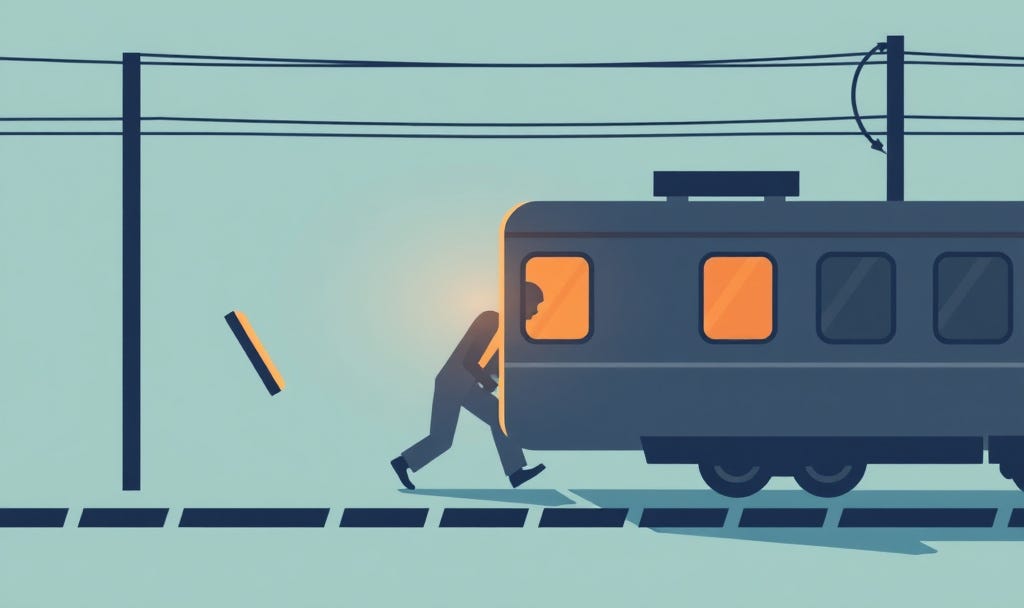
I have seen this pattern enough times now that I recognize it faster than I used to.
On paper, everything looks fine. The plan makes sense. The team is capable. The meetings are happening, the updates are moving, and the work is getting done. From a distance, it looks like progress.
But something still feels off.
That is one of the harder execution problems to diagnose, because nothing has obviously collapsed. People are not refusing to work. The system has not stopped moving. In fact, that is part of the problem. The system is still producing, which makes it easy to assume it is still working.
But activity is not the same thing as progress.
A team can be very busy and still be drifting away from the intended outcome. A project can generate updates, deliverables, decisions, and visible motion while the actual objective becomes less clear. When that happens, the work can start to feel productive even as alignment begins to weaken.
In my experience, the problem usually is not effort. Most teams are not failing because people are lazy or careless. They are failing because something upstream has shifted. The objective changed, the constraints moved, the inputs degraded, or people started operating from slightly different assumptions.
Those shifts are rarely dramatic. They usually happen quietly, in small ways, over time. No one announces, “We are now misaligned.” Everyone just keeps doing the next responsible thing inside the structure they have been given.
That is where drift begins.
The team keeps executing, but not necessarily toward the same outcome. Decisions still get made, but they may be based on different interpretations of what success means. Work keeps moving forward, but alignment starts moving sideways.
From the inside, this can be difficult to see. When people are busy, responsible, and engaged, it feels unfair to say the system is not working. Everyone can point to effort. Everyone can point to output. Everyone can point to something that moved.
But from the outside, the question becomes, “Why isn’t this working?”
The usual instinct is to push harder. Add more communication. Add more oversight. Add another meeting. Ask for more frequent updates. Tighten the reporting cycle.
Sometimes those things help. But they do not fix structural misalignment. If the objective is unclear, the constraints are shifting, or the inputs are inconsistent, more activity may only accelerate the drift. The system gets louder without getting clearer.
This is where AI has helped me see the pattern more cleanly.
When you give an AI system a clear objective, stable constraints, and consistent inputs, the output is usually more usable. When those things start to degrade, the output starts to drift. The system may still respond. It may still produce. It may still appear functional.
But it is adapting to the structure it was given.
That is the part I keep coming back to. Systems do not only execute intent. They execute structure. If the structure is misaligned, the output will eventually reflect that misalignment, no matter how much effort is being applied.
The same thing happens in organizations.
What looks like failure is often structured effort being applied to an unstructured problem. Or worse, well-structured effort being applied to the wrong objective. Both can create a lot of motion. Neither reliably creates the right outcome.
That is why “the system is working” can be misleading. Sometimes what we really mean is that the system is producing. It is moving. It is responding. It is generating evidence of activity.
But production without alignment is noise.
The correction point is usually not at the edge of execution. It is upstream. Before asking for more effort, more coordination, or more output, the better question is not, “Why aren’t people doing more?”
The better question is, “What changed in the structure?”
Because that is where drift usually begins.
And if we do not correct it there, the system will keep doing exactly what systems do. It will adapt to the conditions around it.
Even if that adaptation takes us in the wrong direction.
Author note: This essay reflects my own professional observations and analysis. I use AI as a drafting and editing partner, but the argument, judgment, and final editorial choices are mine.